
AC Tune-Up in Westland: Keep Your Home Cool All Summer
Westland summers don't ease in slowly. One week it's comfortable, the next you're running your AC around the clock. Getting a tune-up before the heat hits means your system is ready when you need it most. This page covers what the service includes, what signs to watch for, and how to make sure everything's working right after we leave.
What an AC Tune-Up in Westland Includes
People ask us this all the time. "What do you actually do during a tune-up?" Fair question. It's not just a quick glance at your unit and a thumbs up. We go through every part of your system, piece by piece, because that's how you catch problems before they leave you sweating in July.
First thing we do is check your thermostat. We make sure it's reading the right temperature and communicating with your system correctly. You'd be surprised how often a thermostat that's off by just a few degrees makes a whole house uncomfortable.
Then we move to the electrical side. We inspect wiring, tighten connections, and test capacitors. Loose wires cause short cycling. Bad capacitors kill compressors. These are small parts that create expensive problems if nobody's looking at them. Our licensed technicians test each connection with a meter, not just a visual check.
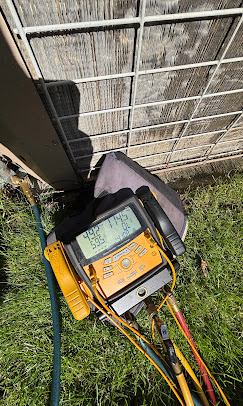
Refrigerant levels come next. Too much or too little and your system works harder than it should. That means higher bills and faster wear on the compressor. We measure the charge and look for any signs of a leak along the line set and at the evaporator coil. Homes in the Norwayne neighborhood and other older parts of Westland tend to have systems where the line set fittings loosen over time, so we pay extra attention there.
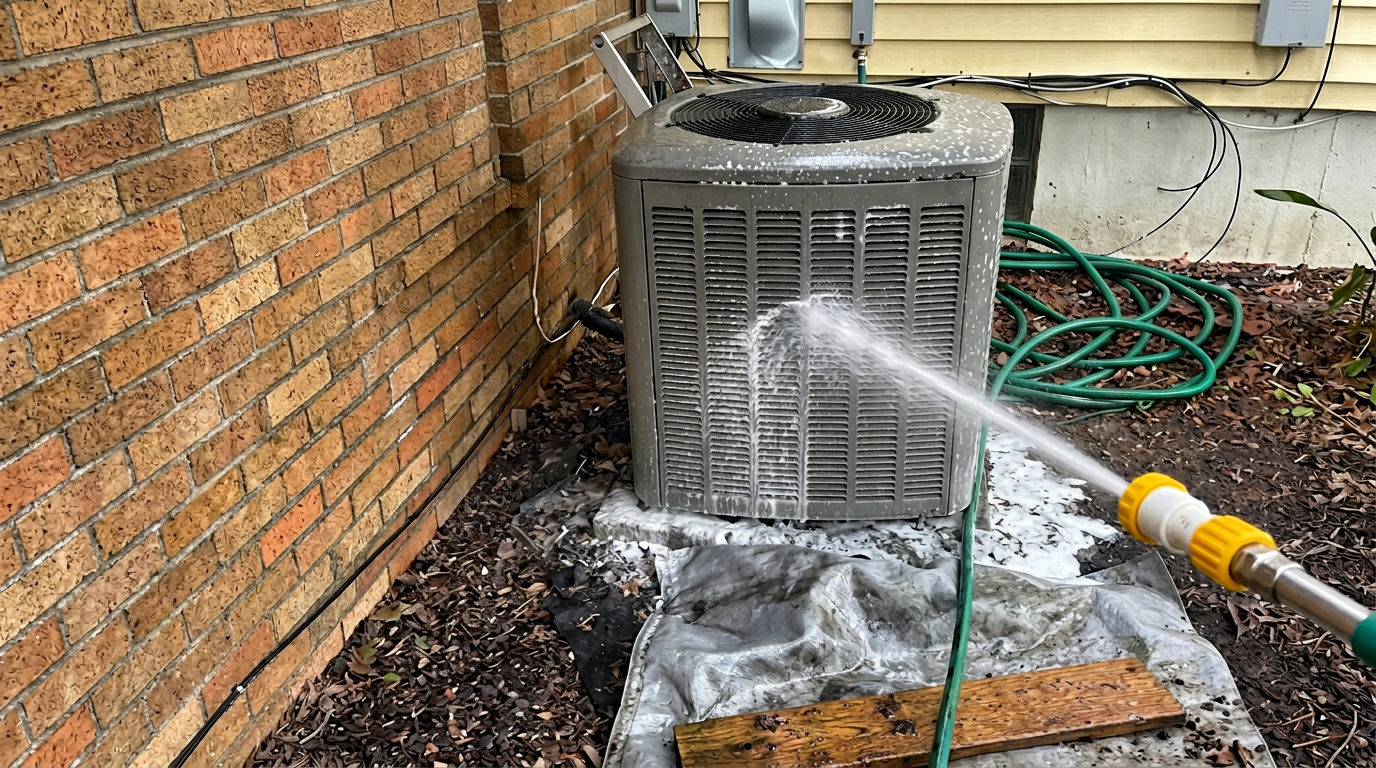
We clean the condenser coil on your outdoor unit. Cottonwood, dirt, grass clippings, all of it blocks airflow. A dirty coil can drop your system's cooling capacity by 30 percent, according to the U.S. Department of Energy. That's like paying for air conditioning and only getting two-thirds of it.
After that, we check the drain line and the drip pan. Clogged drains cause water damage inside your home. We flush the line so condensation flows out the way it should.
Finally, we inspect the blower motor, test the amp draw, and check your air filter. If the filter's clogged, your system chokes. Simple as that. We run the whole system through a full cooling cycle and measure the temperature split across your supply and return vents. You should see a difference of about 15 to 20 degrees. If we don't hit that range, something needs attention.
Skip one step and you're guessing. We don't guess on AC tune-ups in Westland.
Signs Your Westland Home Needs an AC Tune-Up Now
Your AC doesn't just quit one day out of nowhere. It warns you first. Most homeowners don't catch the signs until they're sweating through a July afternoon with no cold air.
Here's the big one we see constantly. Your system runs and runs but the house never feels cool enough. You keep nudging the thermostat down and nothing changes. That's your AC telling you something's off, whether it's low refrigerant, a dirty coil, or airflow that's choked out. We get calls like this every week from folks in the Norwayne neighborhood who've been dealing with it for days before picking up the phone.
Strange noises are another dead giveaway. A healthy system hums. That's it. If you're hearing grinding, clicking, or a buzzing that wasn't there last summer, something inside has shifted or loosened. Ignoring it doesn't make it cheaper to fix. Ever.
What about your energy bills? If last month's bill jumped and your habits didn't change, your AC is working harder than it should. A system that hasn't been tuned up pulls more electricity to do the same job. It's like driving with the parking brake on. You'll get where you're going, but you'll burn through gas doing it.
Weak airflow from your vents is one people overlook. Put your hand up to a register. Feel barely anything? That could be a clogged filter, a failing blower motor, or ductwork issues common in older Westland homes built in the 1950s and 60s. Nine times out of ten it's something simple that a tune-up catches right away.
Short cycling is the sneaky one. That's when your AC kicks on, runs for a few minutes, shuts off, then starts again. Over and over. It wears out your compressor fast and keeps your home at an uneven temperature. You might notice some rooms feel fine while others stay warm and stuffy.
Not sure if what you're noticing counts? That's actually pretty common. If anything feels different from how your system ran last year, that's reason enough to have someone take a look. Small problems caught early stay small. The ones people sit on for weeks turn into the expensive repairs nobody wants.