
Furnace Tune-Up in Westland: Get Ready Before Michigan Winter Hits
Every year we get the same call in mid-January. "My furnace just quit and it's 12 degrees outside." Nine times out of ten, that breakdown started with a small problem we could've caught in October during a tune-up. A pre-winter furnace tune-up is the cheapest insurance you can buy against a no-heat night in Westland. It also keeps your family safe from carbon monoxide and your energy bill from creeping up all winter.
What a Kaiser's Furnace Tune-Up Includes
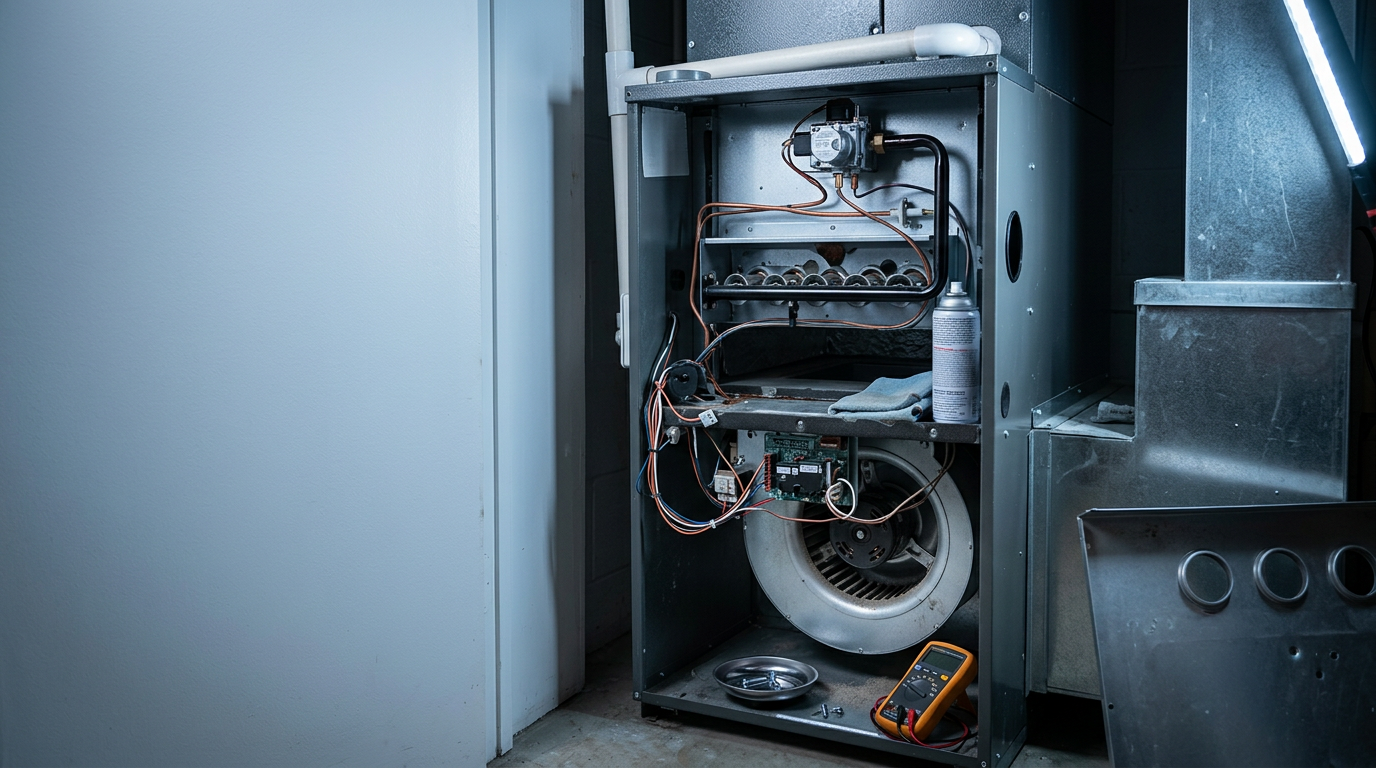
A real tune-up isn't a five-minute filter swap. We're going through every component that keeps your furnace running safe and efficient.
First and most important — the heat exchanger. This is the part that keeps combustion gases separated from the air you breathe. A crack in the heat exchanger means carbon monoxide can leak into your home, and you'd never see it or smell it. We inspect it visually with a scope and verify combustion with an analyzer. Older homes around Norwayne with furnaces pushing 15 to 20 years old need this check every season without exception.
Then we move to the burners. Pull them out, check for rust, dust, corrosion, or anything blocking the gas-air mix. We watch the flame on startup. Healthy flames are blue and steady. Yellow, flickering, or rolling flames mean something's off, and that's a problem we'd rather find on a 50-degree day in October than on a January night.
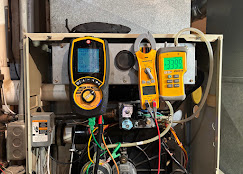
The blower motor gets tested. We check amp draw to make sure it's not pulling more than it should, lubricate the bearings on older units, and inspect the belt if there is one. A blower working too hard means your furnace runs longer to heat the same space — and shortens the life of the motor.
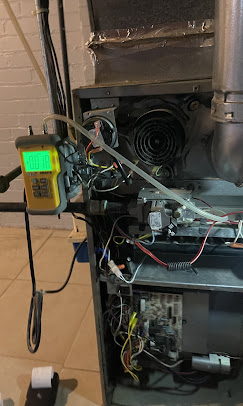
We measure gas pressure at the manifold. Too high or too low and the furnace won't burn cleanly. We test the safety controls — high-limit switch, flame sensor, rollout switches, pressure switch. Every one of those exists to shut the furnace down before something dangerous happens. If they're not working, your safety net is gone.
Carbon monoxide testing is part of every tune-up. We run the system, take a reading at the supply registers, and confirm exhaust gases are venting properly through the flue. If your CO detector hasn't been tested in a while, we'll check that too.
The thermostat gets calibrated. The filter gets checked. Electrical connections get tightened. Condensate drains on high-efficiency units get cleared. By the time we leave, you've got a written report of what's good, what to watch, and what needs attention now.