
The Elevated Radon Threat in Westland
The average resident of a home in Wayne County may not have considered the composition of the soil beneath their foundation. However, in Westland, this factor plays a role. Radon is a gas generated by the decay of uranium in the soil and bedrock below our feet. Invisible and odorless, radon infiltrates homes through cracks in concrete slabs, the gaps around utility lines that pass through slabs, and other openings in the foundation. In fact, according to the U.S. Environmental Protection Agency, radon accounts for the highest number of lung cancer cases among nonsmokers.
The question then becomes, why is Westland particularly prone to radon? There are several reasons:
- The type of soil in Wayne County can release radon from bedrock more readily than in more sandy and porous soils;
- Many of the homes in Westland are mid-20th century (1950s-1980s) constructions when radon-resistance construction techniques were not required;
- Basements are prevalent in Westland homes, providing a direct entry path for radon entering the home; and
- Many Westland homes have weatherized to save on utility costs; this can actually lead to the increased presence of radon in the home.
We encounter this scenario regularly. I once worked with a family near the Norwayne neighborhood of Westland who were preparing their home to go on the market. They had a radon test performed, only to discover that their home had radon levels as high as 8-9 pCi/L. This is higher than the Environmental Protection Agency's Action level of 4 pCi/L! And yet, the family had been living in their home for 15 years and had no knowledge that their house posed a significant health risk for the entire family.
And yet, it is not just older, mid-century homes that can exhibit dangerous radon levels. Even new builds in Westland can test positive for high concentrations of radon gas. The radon simply does not know or care about the age of your home; it cares about what lies below and what avenues it has for entering your home.
One thing that many Westland homeowners don't realize is that radon levels can vary between neighboring homes. In Westland, I see houses on the same block with radon levels that are as low as 2 pCi/L in one and as high as 12 in another. While it is true that soil conditions can vary over relatively short distances, the differences also result from how radon is able to enter the home in each instance. One home may have an uncovered sump pit leading into the basement, while another has a sealed concrete slab on grade. These minor distinctions can make a significant difference in your radon test results.
To truly determine the radon risk in your Westland home, you need a radon test. That is why, each week, I perform a radon test on a home in Westland. And I continue to be pleasantly surprised by the test results! This is precisely why it is imperative that you consider having a radon test performed for your home. Homeowners can also learn more about statewide testing resources and guidance through the Michigan Indoor Radon Program.
How Sub-Slab Depressurization Protects the Old Ranch-Style Homes of Westland
Most homes I work on in Westland are ranch-style homes built in the 1950s to the 1970s, sitting on concrete slabs or poured concrete foundations. The radon mitigation system for these homes differs in a variety of ways from the radon reduction system designed for a newer two-story home with a basement.
, radon gas enters the home from beneath the foundation, seeping from the soil through cracks and gaps. A sub-slab depressurization system creates a vacuum within the foundation to pull radon gas out of the soil below before it enters the home.
This is a task we complete daily, be it in the Norwayne section of Westland, or along the Palmer Road corridor in Westland. That is the basic process:
- Drill a four inch or so hole in the slab.
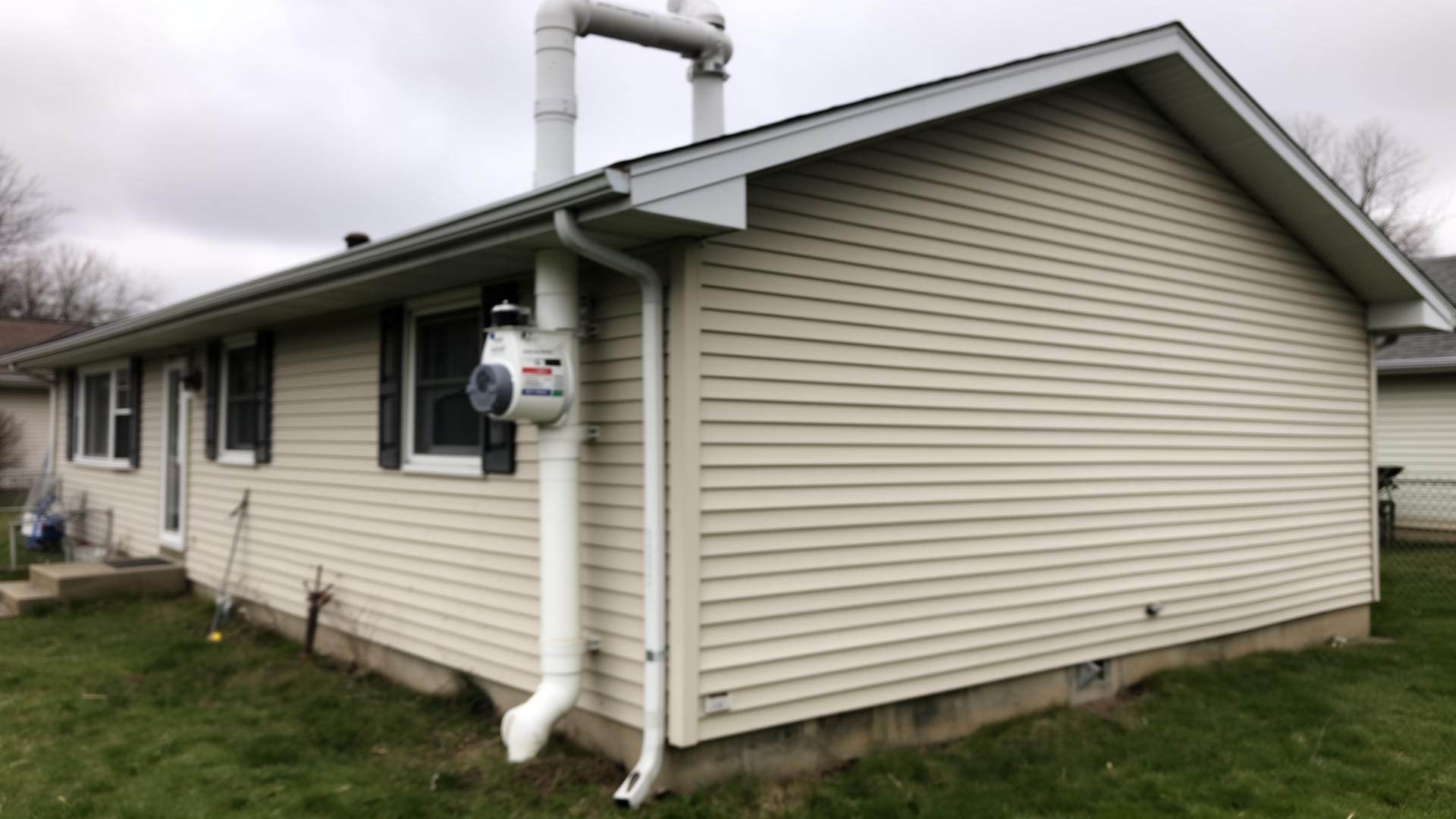
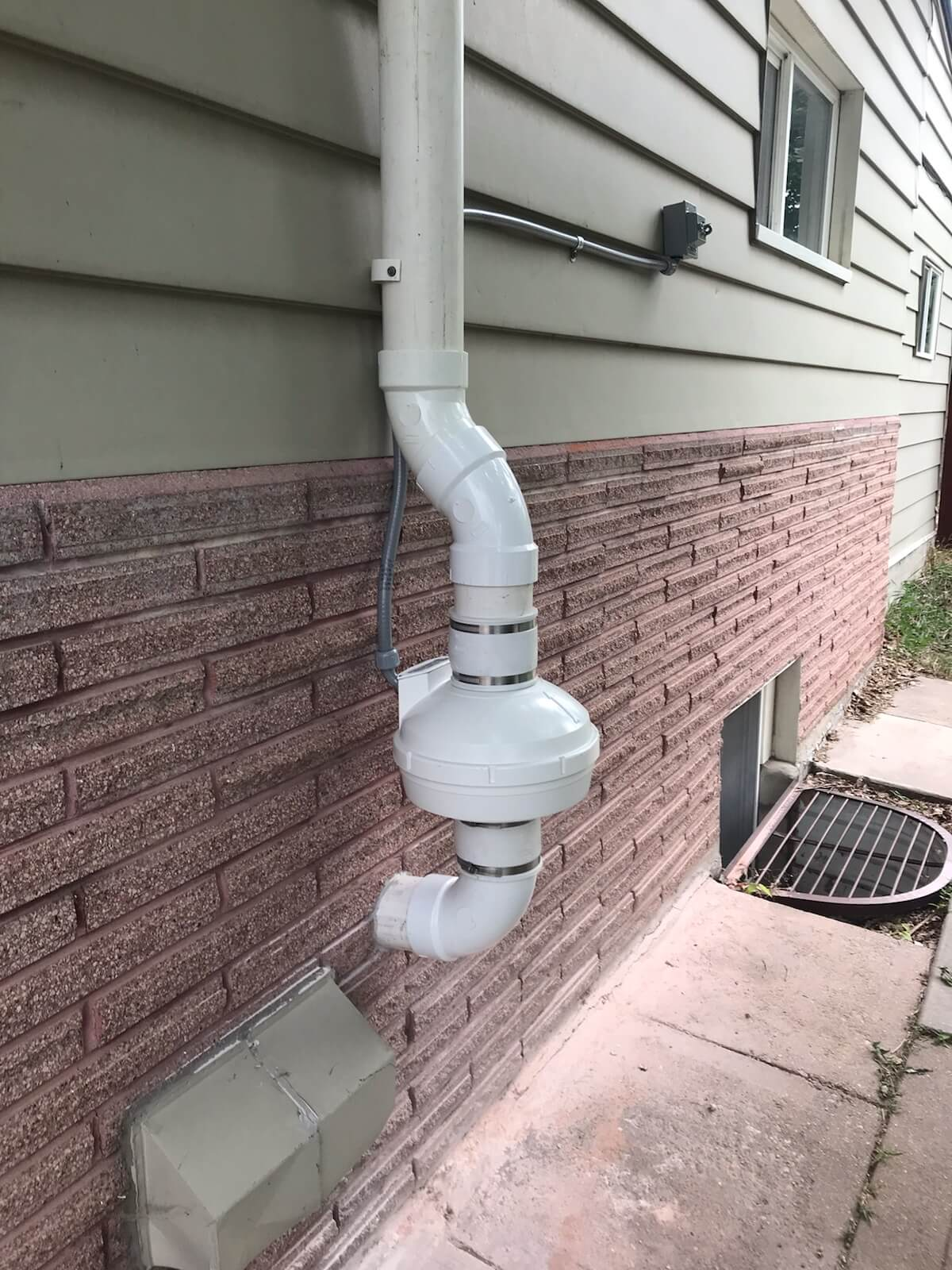
- Pass PVC pipe through the hole, then up inside the home or along an outside wall.
- Mount an inline fan onto that pipe, which will then run 24/7 to create a vacuum under the home's slab.
- Vent that pipe so that it exits above the roofline, dispersing the radon out into the open air away from your foundation.
- Seal up any visible cracks and gaps in the basement slab, which also allows the vacuum system to be more efficient in gathering soil gasses.
Typically, we only have to create one point of suction to reduce radon levels across a home's entire footprint. Ranch style homes, especially older ones built on Westland slabs, have gravel beds beneath the slab, which makes it much easier for the suction to reach all the way across from wall to wall.
That said, it is not uncommon for a ranch style home to have a much thicker or denser fill material below the slab. In order to make sure that one suction point will be enough for your home, we will test the suction using a vacuum gauge before finalizing a single pipe suction point. If the suction does not pull far enough across the home to the far side of the basement, we will install a second suction point.
We typically have the fan running 24/7. We typically find a home owner does not notice the extra electric that is used on a fan like this, since it is equivalent to a small light bulb.
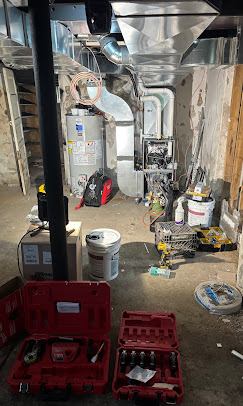
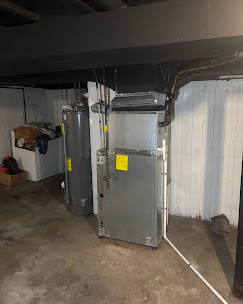
Sometimes a customer will ask me if the new radon system negatively interferes with their existing HVAC system. The answer is no. Since the vacuum suction only applies to the air space directly under the slab, there is not any negative impact on your HVAC system, which includes your furnace, ducts, or air filtration equipment. We do have a very thorough checklist and are licensed HVAC professionals; we do make sure to check to make sure there isn't negative impact to the customer's HVAC system during a standard inspection, but in our experience, we have yet to have an issue with a standard ranch style home.