What Causes Sudden AC Failures in Westland Homes
Your AC was working fine yesterday. Now it's blowing warm air, making a weird noise, or just won't turn on at all. We get calls like this every day during the summer months here in Westland.
So what actually goes wrong? Let's walk through the most common causes we see when we show up to homes across the city.
Capacitor failure is the number one reason. The capacitor is a small part that helps your compressor and fan motors start up. When it dies, your system either won't kick on or it'll hum and struggle without actually cooling. Heat speeds up capacitor wear, and during a Michigan heatwave, they give out fast. We replace more capacitors in July than any other month by far.
Frozen evaporator coils are right behind that. If your air filter hasn't been changed in a while, airflow drops. The coil gets too cold. Ice builds up. Then your whole system shuts down to protect itself. Most homeowners don't realize a dirty filter can lead to a complete breakdown, but it happens all the time.
Electrical issues cause a lot of emergency calls too. Tripped breakers, blown fuses, corroded wiring at the disconnect box outside. Older homes in Westland, especially ones built in the 1960s and 70s, sometimes have electrical connections that can't keep up with modern AC demands. A loose wire at the contactor relay can shut everything down in a second.
Refrigerant leaks are another big one. Your system doesn't "use up" refrigerant like gas in a car. If it's low, there's a leak somewhere. When enough refrigerant escapes, the compressor overheats and the safety switch kills the unit. You might notice it cooling less and less over a few days before it finally quits altogether.
Then there's the thermostat. Sounds simple, but a dead battery or a faulty sensor can make your AC seem completely broken when the fix takes two minutes. Most homeowners have already checked this before they call. But that one time they haven't? It saves a lot of stress.
Condensate drain clogs round out the list. When the drain line backs up, a float switch shuts your system off to prevent water damage. It's actually a safety feature doing its job. But on the hottest day of the year, it sure doesn't feel like your system is helping you out.
Poor maintenance is the leading contributor to HVAC system failures, and that tracks with what we see every week. Most emergency breakdowns aren't random. They're the end result of small problems that built up over time. The good news is that once we diagnose the cause, most of these repairs can be handled in a single visit.
How Kaiser's Heating & Cooling Handles Emergency AC Calls in Westland
You call. We pick up. That's where it starts.
We don't route you through a call center or make you leave a voicemail at 2 AM. When you reach out to us for an emergency AC call in Westland, you're talking to someone who can actually help. We ask a few quick questions to figure out what's going on, is the unit blowing warm air, making a strange noise, or did it just shut off completely? Your answers help our technician show up with the right parts and the right plan.
Most homeowners don't realize how much time gets wasted when a tech shows up blind. We've been doing this long enough to know better. A good phone conversation cuts the repair time in half because we're not standing in your driveway guessing what tools to grab.
Once we're on the way, you'll get a heads-up so you're not just sitting there wondering. Our trucks stay stocked with the most common parts we see failing across Westland, capacitors, contactors, fan motors, refrigerant. The stuff that goes out when your system's been running hard all summer. We carry it because we've replaced hundreds of them in homes right here in the Norwayne neighborhood and along the Palmer Road corridor.
When our tech arrives, the first thing we do is a full diagnostic. Not a quick glance. We check electrical connections, refrigerant levels, airflow, and thermostat communication. We want to find the actual problem, not just the symptom you noticed. Sometimes a unit that won't turn on has a tripped safety switch caused by a clogged drain line. Fixing only what's obvious means we'd be back next week. That's not how we operate.
After we identify the issue, we explain it to you in plain English. No jargon. No scare tactics. Just what broke, why it broke, and what we need to do to fix it. You make the call. We do the work.
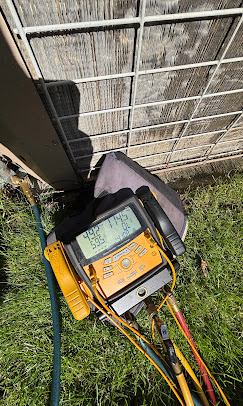
Our technicians are EPA-certified and carry years of hands-on experience. So when we're working on your system at 11 PM on a Saturday, you can trust it's getting done correctly. We test everything before we leave, airflow, temperature drop, amp draw on the compressor. If the numbers don't check out, we're not packing up.
Want to know something we see constantly? Homeowners apologizing for calling late or on a weekend. Don't. That's what emergency service is for. We built our process around getting Westland families back to cool air as fast as possible.
How to Verify the Repair Is Working After the Tech Leaves
Your tech just packed up and drove off. The house feels cooler already. But how do you know the fix is actually holding?
We tell every customer the same thing. Don't just trust the feeling. Check the numbers. Walk over to your thermostat and set it five degrees below the current room temperature. Then wait fifteen minutes. Your system should reach that target without running nonstop or cycling on and off every few minutes. If it hits the mark and the compressor shuts off cleanly, that's a good sign. If it keeps running past the set point or kicks off and back on within a couple minutes, something still isn't right.
Go stand by your vents. You should feel steady, cool airflow from each register in the house. Not lukewarm. Not weak. We get callbacks sometimes from folks over near the Norwayne neighborhood who say the living room feels great but the back bedroom is still hot. That usually means there's a secondary issue like a damper problem or ductwork that got knocked loose. Check it right away so you can call us back the same day instead of suffering through another night.
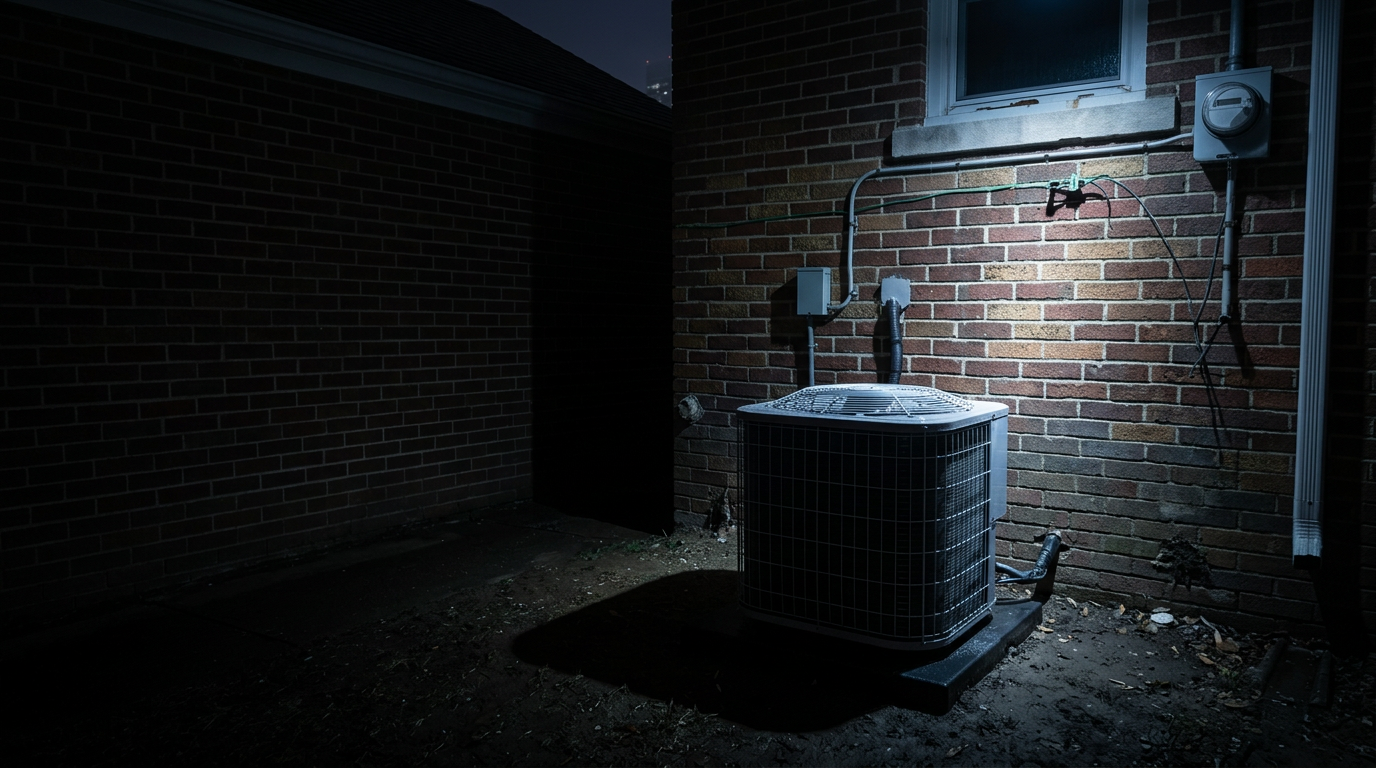
Here's one most homeowners skip. Go outside and look at your condenser unit. The fan should be spinning smoothly. You shouldn't hear grinding, buzzing, or any metallic rattling. The larger copper line running into the house should feel cold and have a little condensation on it. If it's warm or bone dry, the refrigerant charge might not be where it needs to be.
Most solid repairs hold up perfectly. But we always say trust your gut for the first 24 hours. Pay attention to how the system sounds when it starts up. A healthy AC is boring, it clicks on, runs quietly, clicks off. That's it.
One more thing. Check your drain line. Look near your indoor unit for a small PVC pipe that drips water. If it's flowing, your evaporator coil is doing its job and the condensate is draining properly. A dry drain line after a repair can mean the coil isn't cooling enough to pull moisture from the air. That's a red flag.
Keep your phone handy that first day. Not because we expect problems. Because if something does pop up, catching it early means a quick adjustment instead of another full emergency call. Give us a ring if anything feels off, we'd rather answer a quick question now than come back for a bigger issue later.