
Cold spots on your bathroom tile at 6 a.m. That one room over the garage that never warms up no matter what you do. These are the kinds of things people tell us about right before they ask if radiant heat could work for them.
The short answer? Most homes in Westland can handle it. But some are better fits than others.
If you've got a concrete slab foundation, you're already ahead. Tubing lays right into or on top of that slab, and concrete holds heat like nothing else. A lot of the ranch-style homes near Norwayne were built on slabs and they're practically made for this kind of system. We've done installs in that area where homeowners couldn't believe how even the warmth was from room to room.
Finished basements are another big one. We get calls about this every winter. You spent good money finishing that space, but it still feels like a cave in January. Forced air struggles down there. Radiant tubing under the floor changes everything because heat rises right where you're sitting.
Planning a kitchen or bathroom remodel? That's the perfect time. The floor's already coming up, so adding radiant heat costs you almost nothing extra in labor. If you're putting down new tile or engineered hardwood, it just makes sense to run tubing while the subfloor is exposed.
Older homes with small or uneven ductwork are strong candidates too. Some of the houses near Central City Park have original ductwork that was never designed for today's furnaces. Instead of tearing out walls to resize ducts, radiant heat gives you a second heating source that doesn't need ductwork at all.
Not sure if your place qualifies? That's actually pretty common. Here's what we look for during a walkthrough: foundation type, current flooring material, ceiling height below the install area, and how your existing heating system performs. Takes about thirty minutes, and you'll know exactly where you stand. In most cases, there's at least one zone in the house that's a perfect fit.
What to Expect When Kaiser's Heating & Cooling Installs Radiant Floor Heating in Westland
You've decided to go for it. Now what actually happens? We get that question a lot, and knowing the process takes most of the stress out of it.
First, we come out and look at your space. Not a quick glance. We're checking your subfloor condition, measuring the layout, and figuring out how your current heating ties in. Every Westland home is a little different. A ranch near Norwayne might have a concrete slab, while a two-story off Cherry Hill sits on a plywood subfloor with a crawl space. Those details change everything about how we plan the job.
Once we've got a plan, we schedule the install. For most single-zone projects, we're talking one to three days of actual work. Bigger homes or multi-zone setups take longer, but we'll tell you that upfront. No surprises.
On install day, our crew lays out the tubing or heating cables in a pattern designed for your specific room. This isn't random. We space the lines based on heat load calculations so you don't end up with hot spots by the door and cold patches under the window. Then we tie everything into your boiler or dedicated water heater, depending on the system type. For electric systems, we wire the mats and connect your thermostat.
Here's something most homeowners don't realize. The flooring goes back down the same day in most cases. We work with your contractor or handle the coordination ourselves if you're doing new tile, engineered hardwood, or LVP on top. We've done this hundreds of times.
Before we leave, we pressure-test every hydronic loop or verify every electric circuit. We run the system and walk you through the thermostat settings. You'll know exactly how to control each zone. Our licensed technicians don't rush the final walkthrough because that's where small questions get answered before they turn into callbacks. If something feels off in the first week, one call and we're back out.
Preparing Your Westland Home Before Radiant Floor Heating Installation
So you've decided to go for it. Now what happens before we show up with tubing and a manifold.
The biggest thing? Your floors need to be cleared. Completely. Furniture, rugs, appliances, anything sitting on the surface where the system goes in. If we're working in your basement, that means moving storage bins, shelving units, all of it. You don't have to haul everything out of the house. Just get it out of our work zone. We need open floor space to do this right.
Here's something most homeowners don't think about. Your existing flooring matters a lot. Some materials work great over radiant heat. Others fight it. Thick carpet with heavy padding acts like a blanket over the system and traps heat underneath instead of letting it rise into the room. Tile and engineered hardwood let heat pass through well. If you're planning new flooring anyway, tell us before installation day. We'll coordinate so everything goes in the right order.
Your subfloor condition is the other big one. We see this constantly. Homeowners assume the subfloor is fine because the floor above it looks good. But underneath there could be moisture damage, uneven spots, or old adhesive from previous flooring. Any of those can cause problems with tubing layout or heat distribution. We'll check it during our walkthrough, but if you already know there's an issue, give us a heads up.
A few other things to handle before install day. Make sure your boiler or water heater has been inspected recently. Radiant systems need a reliable heat source, and connecting new tubing to an aging unit that's barely hanging on defeats the purpose. We can assess this during our initial visit.
Keep pets and kids away from the work area. Tubing, tools, and open subfloor sections aren't safe for curious feet. Want to make install day smooth? Give us a call ahead of time and we'll walk you through exactly what to prep based on your specific home layout. Takes ten minutes and saves hours of headaches.
Keeping Your Radiant Floor Heating System Running Efficiently in Westland
Your system is installed. Everything feels great. But radiant floor heating needs regular attention to keep performing the way it should. We get calls every spring from folks in Westland who skipped maintenance and now have cold spots or higher energy bills they can't explain.
The good news? Keeping things running well isn't complicated.
First, your boiler or water heater needs an annual checkup. That's the heart of the whole system. If it's not heating water to the right temperature or cycling too often, your floors won't stay consistent. We check the burner, the heat exchanger, and the expansion tank every time. Small issues here turn into big problems fast.
Second, the fluid in your tubing matters more than you'd think. Hydronic systems use a water and glycol mix to prevent freezing and corrosion. Over time, that mix breaks down. We test it and top it off or flush the lines if the pH levels are off. When someone in the Norwayne neighborhood tells us their system "just doesn't feel as warm anymore," the fluid is usually the culprit.
Third, check your thermostat settings with the seasons. Radiant systems respond slower than forced air, so bumping the temperature up five degrees when you're cold isn't the move. A programmable thermostat set to gradual changes saves energy and keeps your floors comfortable around the clock.
Air purging is another one people overlook. Trapped air in the tubing creates blockages that stop hot water from circulating evenly. We bleed the system during every maintenance visit. It takes minutes but makes a real difference.
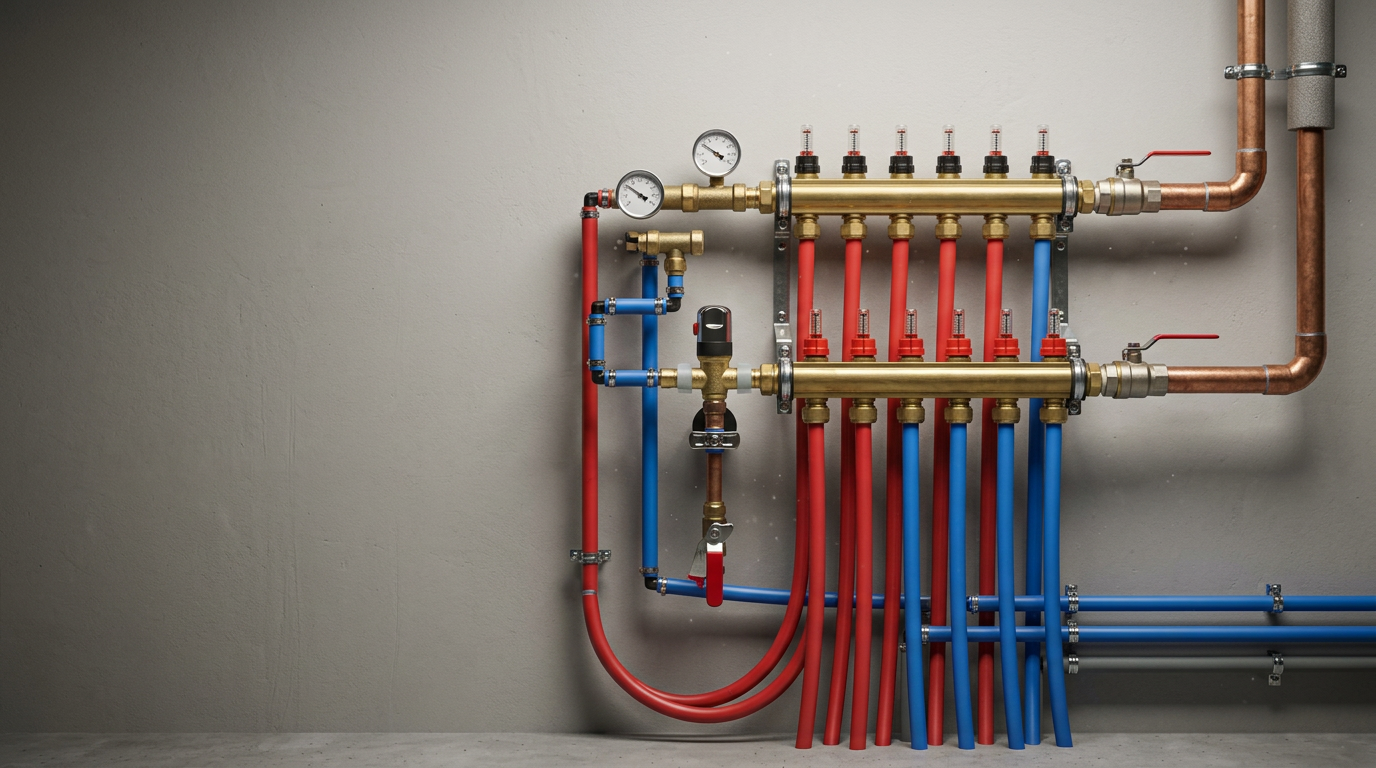
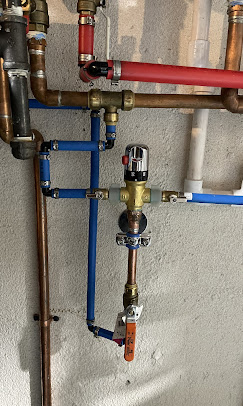
Also keep an eye on your manifold. That's the hub where all your tubing loops connect. Each loop has its own valve, and sometimes they get stuck or need rebalancing. If one room feels noticeably cooler than the rest of your home, that's usually where we look first.
Want us to put your system on a maintenance schedule? Give us a call. One visit a year keeps everything dialed in so you're not scrambling when the first cold snap hits.
According to the radiant heating energy savings guide from the U.S. Department of Energy, radiant heating systems can be more efficient than baseboard heating and most forced-air systems because they eliminate duct losses. But that efficiency only holds up if the system is maintained. Skipping service doesn't save money. It costs you comfort and shortens the life of equipment that should last decades.