
Hvac Zoning Systems in Westland: Control Every Room, Cut Energy Waste
One thermostat. Multiple rooms. Never the right temperature anywhere. If that sounds like your house, you're in the right place. HVAC zoning systems give you real control over every room instead of forcing the whole house to live by one setting.
Signs Your Westland Home Needs an HVAC Zoning System
You've got one thermostat set to 72, but your upstairs bedroom feels like 80. The basement? Freezing. Sound familiar? We get calls like this every week from homeowners in Westland who've been fighting their system for years without knowing there's a real fix.
Here's what to watch for. If you're constantly adjusting the thermostat because one part of your house is too hot while another is too cold, that's the number one sign. A single-zone system pushes the same amount of air everywhere. It doesn't care that your south-facing living room bakes in the afternoon sun while your north-side bedrooms stay cool. It just runs until the thermostat is satisfied, and the rest of the house deals with whatever it gets.
Rooms that never feel right. That's the big one.
But there are other signs most homeowners don't notice until it's too late. If your energy bills keep climbing even though you haven't changed your habits, your system might be overworking itself trying to compensate for uneven temperatures. You're paying to heat or cool rooms nobody's even using. Maybe you've got a finished bonus room over the garage that's always ten degrees off from the rest of the house, or a home office in the back that turns into a sauna by 2 p.m. These aren't problems you solve by closing vents. Closing vents actually creates pressure issues that can damage your equipment over time.
Another thing we see a lot in Westland? Two-story homes where the upstairs is unbearable in summer. Heat rises. That's just physics. A single thermostat downstairs has no idea what's happening up there, so it shuts off while your kids' rooms are still sweltering.
Got rooms with big windows, vaulted ceilings, or additions that were built after the original ductwork? Those are almost always problem spots. The ductwork was never designed to handle the extra load. A zoning system lets you direct airflow exactly where it's needed instead of treating your whole house the same.
If any of this sounds like your situation, you're not dealing with a broken system. You're dealing with a system that was never set up to handle your home's layout. That's fixable.
How HVAC Zoning Systems Work in Westland Homes
Most people call us because one room feels like a sauna while another feels like a walk-in cooler. Same house, same furnace, totally different temperatures. That's the exact problem zoning solves.
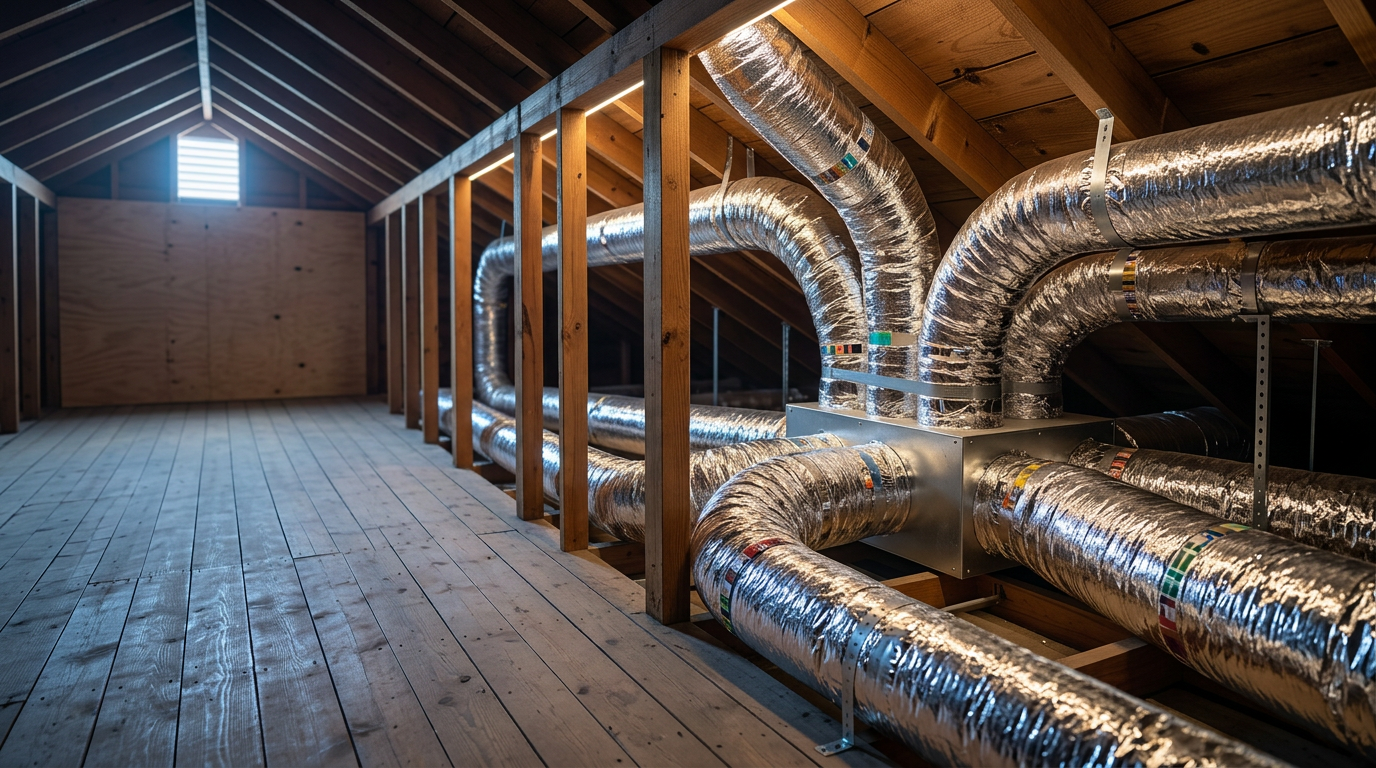
Here's the simple version. A zoning system splits your home into separate areas, called zones, and each zone gets its own thermostat. Motorized dampers sit inside your ductwork and open or close based on what each thermostat is asking for. So your upstairs bedrooms can stay cool at night while the living room downstairs holds a different temperature entirely. One system, multiple comfort levels.
The brain of the whole setup is the zone control panel. It talks to every thermostat and tells the dampers what to do. When your master bedroom hits the set temperature, the damper for that zone closes. But if the basement is still five degrees off, that damper stays wide open and keeps pulling conditioned air. Your furnace or AC doesn't run any harder. It just sends air where it's actually needed.
We see this make a huge difference in Westland homes built in the '60s and '70s. A lot of those ranch-style and split-level houses have ductwork that was designed for a single zone. Finished basements, added sunrooms, rooms over garages, these spaces never got proper airflow from the original design. Zoning fixes that without tearing out your whole duct system.
Two-story homes are the other big one. Heat rises. That's not a theory, that's just physics. Your upstairs will always run warmer unless something controls the airflow. A zoning system handles it automatically, all day long, without you touching a thing.
And no, it doesn't hurt your equipment. We get that question constantly. The zone panel manages airflow so your furnace and AC operate within safe parameters. A bypass damper relieves excess pressure when only one small zone is calling for air. According to the U.S. Department of Energy, zoning can cut heating and cooling costs by up to 30 percent because you're not conditioning rooms nobody's using.
Think of it like light switches. You don't light every room in the house at once. Zoning gives you that same control over your comfort.