
Kaiser's Heating & Cooling
    5 out of 5 stars on Google

    HVAC Energy Audits in Westland and Metro Detroit

    People ask us this all the time. "What are you actually looking at?" Fair question. So here's the honest answer.

    Dual diagnostic meters

    Recent Work

    Photos from real Kaiser's jobs across Metro Detroit.

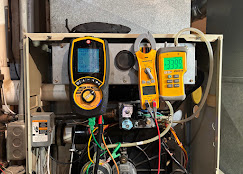
    Dual diagnostic meters
    Diagnostic meters used during an energy audit
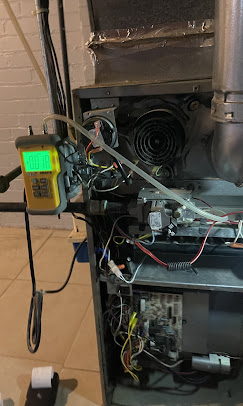
    Furnace combustion analyzer
    Combustion efficiency testing

    Need HVAC Energy Audits? Get a Free Estimate.

    Skip the search — call now or send your details and we'll respond fast.

    Part of our Heating Contractor services in Westland and Metro Detroit.

    HVAC Energy Audits in Westland: Find What's Costing You Money

    What an HVAC Energy Audit Actually Checks in Your Westland Home

    People ask us this all the time. "What are you actually looking at?" Fair question. So here's the honest answer.

    We start with your ductwork. That's where most of the problems hide. In a lot of Westland homes, especially the ones built in the '70s and '80s near the Norwayne area, the original ductwork has gaps, loose connections, or flat-out holes. You can't see them because they're behind walls or running through crawl spaces. But your heated air finds every gap. We use pressure testing to measure exactly how much air you're losing before it ever reaches your rooms.

    Then we look at insulation levels. Not just whether you have insulation, but whether it's doing its job. Settled attic insulation is something we see every week. It compresses over time, loses its R-value, and suddenly your furnace is running twice as hard for the same result. We check attic depth, wall cavities where we can access them, and basement rim joists.

    Your equipment gets a full evaluation too. We're measuring airflow across the blower, checking refrigerant charge if you've got central air, and looking at how your furnace cycles. A furnace that short-cycles burns more gas than one running steady. Most homeowners don't notice this until their bill spikes in January.

    We also run a blower door test. This one surprises people. We depressurize your house slightly and measure how much outside air leaks in. Windows, door frames, electrical outlets, recessed lights, all of it adds up. A drafty house in Westland forces your system to work overtime every day.

    Thermostat placement and programming get checked too. You'd be amazed how many thermostats sit right next to a heat source or in direct sunlight. That throws off readings and makes your system behave erratically.

    The whole point isn't to find one big problem. It's to find the ten small ones that add up to real money walking out your door. The U.S. Department of Energy says air leaks and poor insulation alone can account for up to 30 percent of a home's heating and cooling costs. Once we map it all out, you've got a clear picture of what to fix first and what can wait.

    Signs Your Westland Home Needs an HVAC Energy Audit Now

    Questions About HVAC Energy Audits?

    Get a free estimate or talk through your options with our team.

    Your energy bill keeps climbing, but nothing's changed. Same thermostat setting. Same routine. That's the number one reason people in Westland call us. They open that DTE bill and something just doesn't add up.

    Here's what we tell them. A high bill is a symptom, not the problem. The real issue could be a dozen different things, and guessing costs you more money every month you wait.

    So what should you actually watch for? Rooms that won't stay comfortable. Maybe your upstairs bedroom near Norwayne feels ten degrees warmer than the living room in July. Or your furnace runs constantly in January but the house still feels drafty. These aren't normal. They're your home telling you something's wrong with how energy moves through it.

    We see this every week. A homeowner figures their system is just old and starts shopping for a new furnace. But the real culprit is leaky ductwork buried in the crawlspace, or attic insulation that's settled down to almost nothing over twenty years. Without an audit, you'd never know. You'd spend thousands replacing equipment that wasn't actually the problem.

    Other signs people miss? Your system short cycles, kicks on and off every few minutes. Humidity feels wrong inside, either too sticky in summer or bone dry in winter. You hear the blower running hard but barely feel air at certain vents. Dust buildup that seems relentless no matter how often you clean.

    Older homes in Westland, especially those built in the 1960s and '70s, tend to have these issues stacked on top of each other. Thin insulation, original ductwork, single pane windows, and a system that's been patched together over the decades. One problem feeds the next.

    Not sure if this is what you need? That's actually pretty common. Most homeowners don't notice these signs until they've been overpaying for a year or more. Once we identify what's going on, the fixes are usually straightforward. But you can't fix what you can't see, and that's exactly what an audit is for.

    How Kaiser's Heating & Cooling Performs HVAC Energy Audits Across Westland

    We don't just show up and glance at your furnace. Our team follows a step-by-step process that checks every part of your heating and cooling system. The whole point is finding where your energy dollars are leaking out. And there's almost always something.

    First, we walk through your home with you. We want to hear what you've noticed. Maybe one bedroom stays cold no matter what. Maybe your utility bill jumped forty bucks last winter. That conversation tells us a lot before we even open a tool bag.

    Then we get into the technical side. We test airflow at every register and return vent. We check your ductwork for leaks, especially in crawl spaces and attics where connections loosen over time. Homes near Norwayne and the older neighborhoods along Palmer Road tend to have original ductwork that's been patched more than once. We see it constantly.

    We measure your system's actual output against what it should be producing. A furnace rated at 80,000 BTUs that's only pushing 60,000 is costing you real money every month. We use combustion analyzers and digital manometers to get exact numbers. Not guesses.

    Insulation around refrigerant lines, electrical connections, thermostat calibration, blower motor performance, all of it gets checked. We also look at how your system interacts with your house itself. Poor attic insulation or leaky windows can make even a brand-new unit work twice as hard.

    After everything's documented, we sit down with you right there in your home and explain what we found. Plain English. No jargon dump. We'll show you which fixes will save you the most and which ones can wait. Our licensed technicians have been doing this work across Wayne County for over fifteen years, so what matters and what doesn't.

    The whole audit usually takes about two hours. You don't need to prepare anything special. Just be home so we can walk through it together.

    What Audit Results Tell You About Your HVAC System's Efficiency

    So you've got the audit report in hand. Now what? Most homeowners flip through it and feel a little lost. That's normal. Let us walk you through what actually matters.

    The report breaks your system down into clear categories. Airflow, duct integrity, equipment performance, insulation levels, and how well your thermostat communicates with the rest of the system. Each one gets a rating or measurement. But the real value isn't in any single number. It's in how those numbers connect to each other.

    Here's what we mean. Your furnace might look fine on paper, good combustion, clean flame, normal operating temperature. But if your ductwork is leaking 25 percent of conditioned air into the crawl space, that furnace is working way harder than it should. We see this constantly in older Westland homes, especially around the Norwayne neighborhood where a lot of the original ductwork hasn't been touched in decades. The equipment isn't the problem. The delivery system is.

    Your audit results will also show you where heat is escaping. Thermal imaging picks up cold spots around windows, exterior walls, and attic access points. Air leaks can account for 25 to 30 percent of heating and cooling energy use. That's real money leaving your house every month.

    One thing we always point out is the runtime data. If your system runs for 45 minutes out of every hour just to hold 70 degrees, something's wrong. A well-matched, efficient setup shouldn't need to run that much. The audit tells you exactly why it's happening, whether it's undersized equipment, poor insulation, or a combination.

    We also flag any safety concerns. Carbon monoxide readings, gas line integrity, electrical connections. These aren't efficiency issues. They're safety issues. And they show up in audits more often than people expect.

    Nine times out of ten, the audit doesn't point to one massive failure. It reveals a handful of smaller problems stacking on top of each other. A little duct leakage here, a worn blower motor there, some missing weatherstripping around a back door. Individually? Minor. Together? They're costing you hundreds a year in wasted energy. The audit gives you a clear priority list so you fix the biggest energy drains first.

    How Regular HVAC Energy Audits Protect Westland Homes Year-Round

    Your furnace ran all winter. Your AC will run all summer. That's a lot of hours on equipment that nobody's actually checked for efficiency. Most homeowners in Westland don't think about their HVAC system until something breaks. By then, you've already spent months paying more than you needed to.

    A regular audit catches the slow problems. The ones that don't trigger a breakdown but quietly drain your wallet every billing cycle.

    Think about it this way. A small duct leak in your crawlspace might only waste 5% of your heated air today. But over a full Michigan winter, that's real money, and it gets worse each year as seals age and insulation settles. We see this in older homes near the Norwayne neighborhood all the time. Ducts that were fine ten years ago are now leaking at every joint.

    Scheduling an audit once a year, ideally before heating season or cooling season, gives you a clear picture of where your system stands. Not a guess. An actual measurement of how your equipment performs compared to how it should. You'll know if your blower motor is working harder than necessary, if your refrigerant charge has drifted, or if your thermostat calibration is off by a few degrees. Small stuff that adds up fast.

    Here's what regular audits actually prevent. Premature equipment failure. Uneven temperatures room to room. Carbon monoxide risks from cracked heat exchangers. Mold growth from condensation problems nobody spotted. Heating and cooling account for nearly half of a typical home's energy use. Even a modest efficiency gain makes a noticeable difference in your monthly bill.

    We've been doing this work across Westland long enough to know that the homes getting checked regularly almost never call us for emergencies. That's not a coincidence. The families who skip audits for three or four years are the ones calling on the coldest night in January wondering why their furnace quit.

    You don't need to wait for a problem to find out where you stand. One visit gives you a full snapshot and a clear plan.

    Ready to Request an Estimate?

    Call now or send us your details — over 20 years of on-the-job experience serving Westland and Metro Detroit.

    Frequently Asked Questions

    Ready to Get Started?

    Talk with our team about your hvac energy audits project. Over 20 years of on-the-job experience serving Westland and Metro Detroit.

    Related Services

    Call NowRequest Estimate