
Humidity Control in Westland: Keep Your Home Comfortable Year-Round
Signs Your Westland Home Has a Humidity Problem
Foggy windows in the morning. That musty smell in the basement that won't quit. Peeling paint along the bathroom ceiling. These are the things Westland homeowners describe when they call us, and most of the time, it all points to the same issue.
Too much moisture inside your home shows up in ways you might not connect at first. Maybe the wood trim around your doors has started to swell and they're sticking when you close them. Or you've noticed dark spots forming in the corners of a bedroom closet. That's not dirt. That's mold getting a foothold because the air is holding more water than it should.
Low humidity causes its own set of headaches. Cracked hardwood floors, constant static shocks, dry skin that no lotion seems to fix. We get calls about this every winter from folks over near the Norwayne neighborhood who have older homes with forced-air heat. That type of system pulls moisture right out of the air if there's nothing to balance it.
Here's what most people don't realize. Your home doesn't have to feel damp for humidity to be a problem. We've walked into houses that felt perfectly fine but had condensation pooling between window panes. The damage was already happening behind the scenes.
So what should you actually watch for? A few reliable tells:
- Condensation on windows or cold surfaces, especially overnight
- A persistent musty or stale smell in any room
- Wallpaper bubbling or paint peeling without a water leak
- Wooden furniture, doors, or floors warping or cracking
- Allergy symptoms that get worse when you're inside
According to the EPA, indoor relative humidity should stay between 30 and 50 percent. Anything outside that range starts causing problems for your home and your health. Most Westland homes we test land well outside that window during summer and winter.
Not sure if what you're seeing is actually a humidity issue? That's pretty common. A lot of these signs look like other problems. But once we put a hygrometer in your space and check a few key areas, the answer becomes obvious fast. The sooner you spot these signs, the less repair work you'll need down the road.
Why Westland's Climate Makes Humidity Control Essential
Westland sits right in the path of Great Lakes moisture. That's not just a weather fact. It's the reason your windows fog up every November and your basement feels damp all summer long.
We get calls about humidity control year-round here, and most homeowners don't realize how much the local climate is working against them. Michigan summers push outdoor humidity well above 70 percent regularly. Your AC removes some of that moisture, but it can't keep up on the worst days. Then winter hits and the opposite problem shows up, your furnace runs constantly, drying out indoor air until you're waking up with cracked lips and static shocks every time you touch a doorknob.
That swing is what makes Westland so tough on homes.
Over near Norwayne, we see a lot of older ranch-style houses with original ductwork. Those homes lose and gain moisture faster than newer builds because the air sealing just isn't there. But even newer construction deals with it. Tight building envelopes trap moisture inside during summer, and without proper ventilation, you end up with condensation on windows, musty closets, and mold starting behind drywall where you can't see it.
Understanding the importance of controlling indoor moisture levels is key to protecting your home year-round. When we check a Westland home, it's outside that range in at least one season. Usually both.
Here's what that actually means for you. Too much humidity feeds mold, dust mites, and bacteria. Too little cracks your hardwood floors, loosens furniture joints, and irritates your respiratory system. Your home's structure takes a beating either way. We've pulled back trim boards in Westland basements and found moisture damage that started years before anyone noticed a problem.
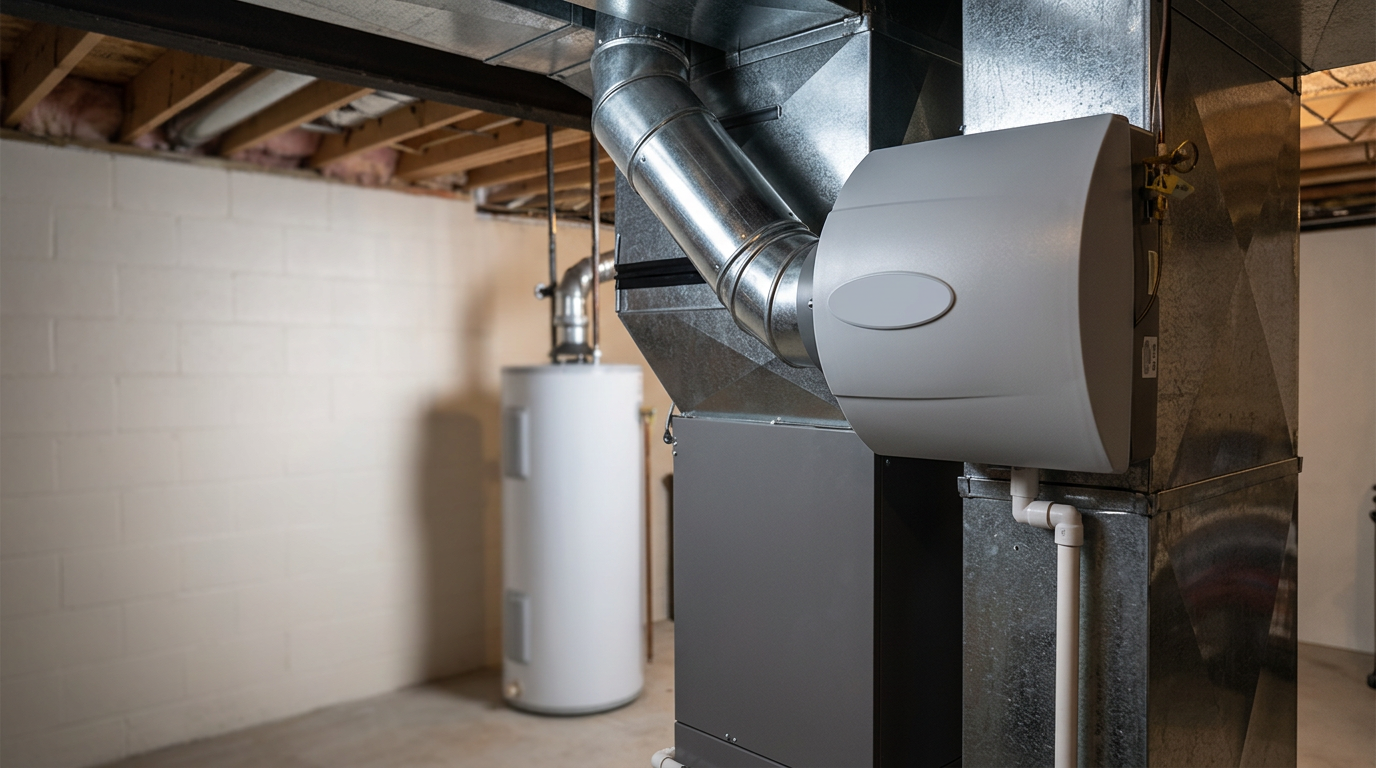
So it's not just about comfort. It's about protecting your home and your family's health. The climate here doesn't give you a break, which means your house needs a system that actively manages moisture instead of hoping the furnace or AC handles it on its own.