
Furnace Maintenance in Westland: Keep Your Heat Running All Winter
What Furnace Maintenance in Westland Actually Includes
A lot of folks think furnace maintenance is just swapping out a filter and calling it a day. We hear that all the time. But a real tune-up goes way deeper than that, and the difference shows up in your comfort, your energy bills, and how long your system lasts.
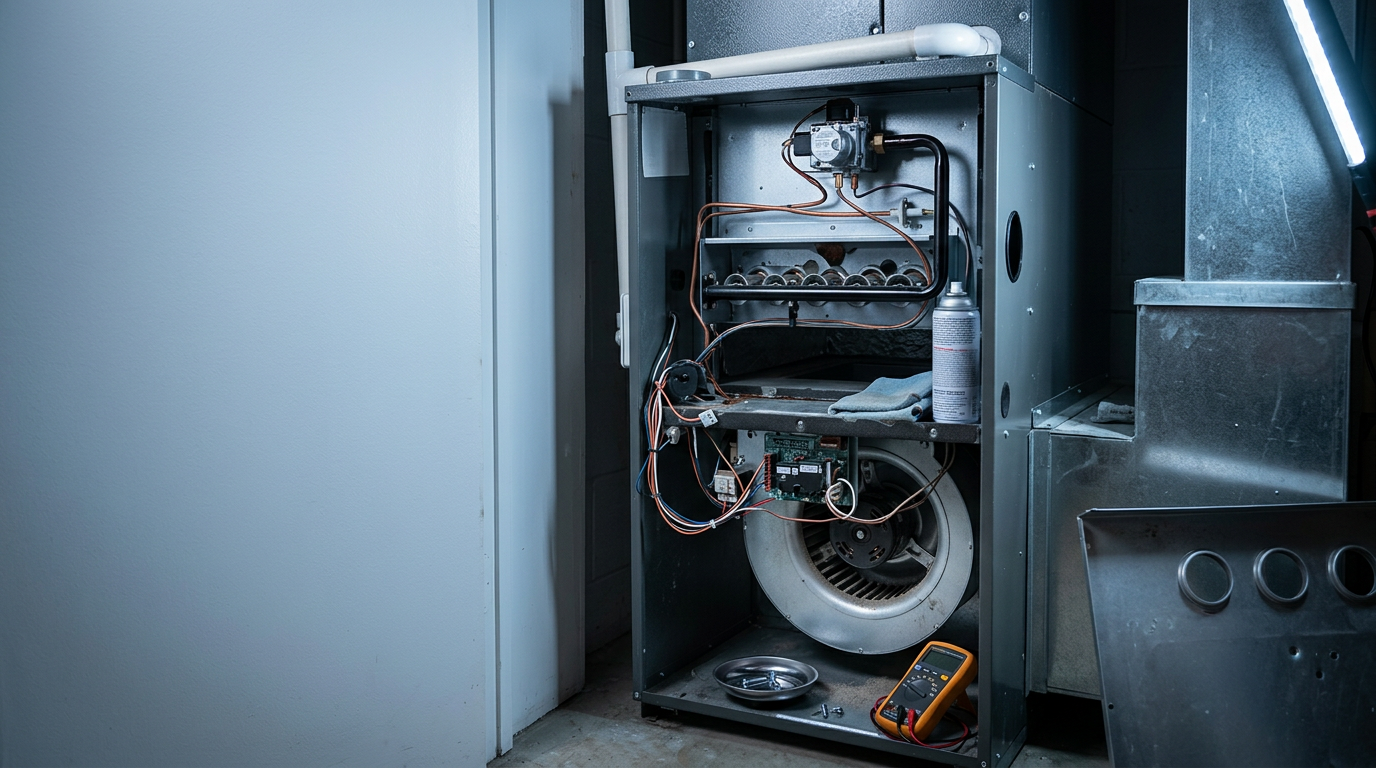
When our team shows up at your Westland home, we start with a full visual inspection of the unit. We're checking for rust, cracks, loose wiring, and anything that looks like it's wearing out faster than it should. Then we move to the burners. Dirty burners don't heat evenly and they waste gas. We clean them, check the flame sensor, and make sure ignition happens the way it's supposed to. Nine times out of ten, a furnace that won't kick on has a dirty flame sensor. Takes two minutes to fix during maintenance. Costs a lot more on an emergency call at midnight.
After that, we test the heat exchanger. This one matters. A cracked heat exchanger can leak carbon monoxide into your home. You can't smell it or see it. We use specialized tools to check for even tiny fractures. Homes in the Norwayne neighborhood, especially older builds from the 1950s and 60s, tend to have systems that are more prone to this. We flag it early so you're never caught off guard.
We also inspect the blower motor, lubricate moving parts, and test your thermostat to make sure it's reading temperatures correctly. A thermostat that's off by even three degrees makes your furnace work harder than it needs to.
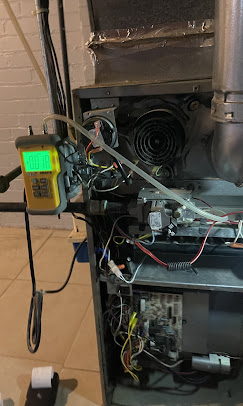
The last step is measuring airflow and checking your ductwork connections right at the unit. Leaky duct joints near the furnace push heated air into your basement or crawl space instead of your living room. Most homeowners don't notice this until they realize one room is always cold.
So when we say furnace maintenance, we mean a full system checkup. Every component that affects safety, efficiency, and performance gets attention. That's what separates a real tune-up from someone just going through the motions.
Signs Your Westland Furnace Needs Maintenance Now
Your furnace talks to you. Most homeowners just don't know how to listen.
We get calls like this every winter. Someone in Westland notices their house feels colder than usual, even though the thermostat says 72. They crank it up. Nothing changes. That's one of the first signs your system is struggling. If your furnace runs and runs but can't hold the temperature you set, something's off. Could be a dirty filter choking airflow. Could be a failing blower motor. Either way, it won't fix itself.
Strange noises are another big one. A healthy furnace hums. That's it. So if you're hearing banging, rattling, or a high-pitched squeal, pay attention. We see this constantly in older homes near Norwayne. Banging usually means a delayed ignition, which is gas building up before it lights. That's not something you want to ignore.
Here's what most people miss. Short cycling. Your furnace kicks on, runs for a few minutes, shuts off, then starts again. Over and over. It's working harder and heating less. Nine times out of ten it's the same thing: a dirty flame sensor or a clogged filter causing the system to overheat and shut down as a safety measure.
Yellow or flickering pilot lights tell you something too. A steady blue flame is normal. Yellow means incomplete combustion, and that can point to carbon monoxide issues. Not a maybe. A real safety concern for your family.
Watch your energy bills. If your gas or electric costs jump without a rate change, your furnace is probably losing efficiency. Dust buildup, worn parts, and neglected components all force the system to burn more fuel for the same result.
And then there's the smell. A dusty, burning odor when the heat first kicks on in fall? Normal for the first day. If it lingers past that, or you notice a rotten egg smell at any point, shut the system off and call someone. That's not a wait-and-see situation.
Bottom line: if something feels different, it probably is. Your furnace doesn't develop quirks for no reason.