
Furnace Installation near Riley Park in Farmington
Furnace Installation for Farmington Homes Around Riley Park
Riley Park sits in the heart of downtown Farmington at Grand River and Farmington Road, with the Sundquist Pavilion and the gazebo where the farmers market sets up on Saturdays. The neighborhoods around the park run from 1920s downtown homes north of Grand River to mid-century subdivisions south of Shiawassee. We install furnaces in this stretch year-round.
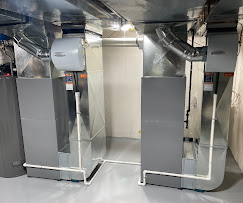
The first decision in any Farmington furnace installation is sizing. A lot of these homes have had additions, finished basements, or attic conversions over the decades. The original 80,000 BTU furnace that was right for the 1955 house isn't right for the 2,800-square-foot version with a finished basement and a sunroom. We do a Manual J load calculation on every installation. It takes an hour and prevents a decade of operating issues.
The downtown homes north of Grand River, between Power Road and Farmington Road, were built between 1915 and 1940. Many have had multiple furnace replacements over the years. The current installation cycle is replacing 80% mid-efficiency units with 96+ AFUE modulating systems. That swap brings real challenges: chimney venting changes, gas line sizing checks, and condensate handling for the new equipment.
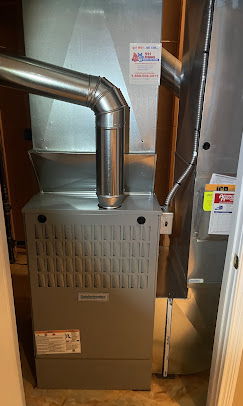
A furnace installation we did last spring on Cloverdale, two blocks north of Riley Park, illustrates the work. The old 80% unit was venting through the chimney along with the water heater. We removed the furnace, installed a 96 AFUE modulating unit with sidewall PVC venting, and the chimney was orphaned for the water heater. The water heater needed a new aluminum liner sized for its alone use. We did the liner and the install in the same week. The home went from $310 monthly winter gas bills to $190 in the first heating season.
The mid-century subdivisions south of Shiawassee — homes built between 1955 and 1975 — share a different pattern. The basements are larger, the original ductwork is generally adequate, and the gas service was installed when central heat was already standard. Installations there are more straightforward. The decision points are equipment quality, staging, and whether to upgrade from a single-stage to a two-stage or modulating unit.
One thing Farmington homeowners ask about: humidification. Michigan winters are dry, and the high-efficiency furnaces actually pull more moisture out of the air than the old 80% units did because they capture so much more heat. We install whole-house humidifiers as part of new furnace installations regularly here, especially in the older downtown homes where dry air can damage hardwood floors and furniture.
The chimney question matters across all of Farmington. When a 96+ AFUE replaces an 80% unit, the chimney is no longer venting the furnace's combustion gases. That can mean a liner for the water heater alone, or a power-vent water heater replacement, depending on the situation. We walk through the options on the quote.
Gas line sizing comes up too. Farmington's older neighborhoods had gas service installed in the 1940s and 50s with line sizes appropriate for the equipment of the era. A modulating high-efficiency furnace plus a tankless water heater can exceed the original line capacity. We check line size as part of the quote and upsize when necessary.