
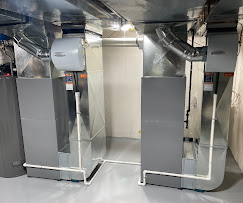
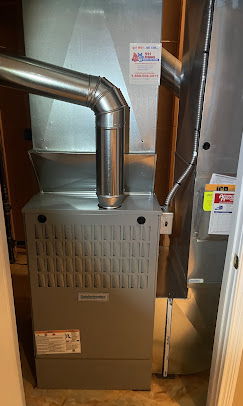
Furnace Installation near Kellogg Park in Plymouth
Furnace Installation for the Older Homes Around Kellogg Park
Kellogg Park is the heart of downtown Plymouth — Main Street, the Penn Theatre, the farmers market on Saturday mornings, and the historic homes radiating out from the park into Old Village and the Plymouth Historic District. The houses around there are unlike anywhere else we work. Most were built between 1900 and 1940. Some still had gravity furnaces in them when we walked in.
That makes furnace installation a different job here than it is in newer suburbs. You're not just dropping a new 96 AFUE unit into the basement and walking out. You're working with original ductwork that wasn't sized for forced air, old chimneys that need liners or relining, and floor plans that put the furnace in a space the size of a closet.
We did an installation last winter for a couple on Penniman Avenue, two blocks west of Kellogg Park. The old furnace was a 1980s 80% unit that had been retrofit into what was originally a coal furnace footprint. The duct trunks were oversized, the returns were tiny, and the chimney needed an aluminum liner before the new high-efficiency unit could be vented through it. That's the kind of detail you can't see from a photo. You have to walk the basement and look at what's actually there.
The homes south of Ann Arbor Trail, between the park and Hines Drive, run into a similar pattern. Many were converted from oil to gas at some point in the 1960s or 70s. The conversions left undersized gas lines that don't deliver enough BTUs for a modern variable-speed furnace. We've had to upsize the gas line on more than one Plymouth installation to get the unit to fire correctly.
Then there's the question of the right size. A lot of older Plymouth homes have had additions, finished basements, or attic conversions that changed the heat load substantially. The furnace that was right for the original 1,400-square-foot house isn't right for the 2,400-square-foot version. We do a Manual J load calculation on every installation in Plymouth's older neighborhoods, because guessing the size on these houses is how you end up with short-cycling and uneven heat.
One thing Plymouth homeowners care about more than most: aesthetics. Many of these homes have been carefully restored. We route flue piping and condensate drains in a way that respects the original woodwork in basements that have been finished with character. That's not a normal install consideration in a 2010-build subdivision. It's a regular one in this part of Plymouth.
And the high-efficiency units we install change the venting story too. A 96+ AFUE furnace vents through PVC, not the chimney. That means a sidewall penetration somewhere, and on a historic Plymouth home you're picking the location carefully — usually on a side wall that doesn't show from the street.