
Professional Dehumidifier Installation in Westland Homes
Westland homes deal with some of the worst humidity problems in the region. Clay-heavy soil, older block foundations, and Michigan's wet summers create conditions that portable units just can't handle. Our licensed HVAC team installs whole-home dehumidifiers that tie directly into your existing ductwork and keep every room at the right moisture level year-round.
Why Westland Homes Need a Whole-Home Dehumidifier
You walk downstairs and the air feels heavy. Thick. Your basement smells musty, and there's condensation on the windows even though it's July. Sound familiar? We get calls like this every week from homeowners across Westland.
Here's what most people don't realize. Westland sits on flat, clay-heavy soil that holds moisture like a sponge. After a good rain, all that water pushes against your foundation walls and seeps in through tiny cracks you can't even see. Once that moisture gets inside, it doesn't stay in the basement. It works its way up through your whole house.
A lot of the homes here, especially in neighborhoods like Norwayne and around the Central City Parkway area, were built in the 1950s through 1970s. Block foundations. Minimal vapor barriers. These homes were built tough, but they weren't built to manage humidity the way it needs to be managed now. So the moisture just sits there, feeding mold, warping wood trim, and making your HVAC system work overtime.
Your air conditioner removes some humidity. But it wasn't designed to be a dehumidifier. On those muggy Michigan days when it's 85 degrees and 80 percent relative humidity outside, your AC can't keep up. The EPA says indoor humidity should stay between 30 and 50 percent. Most Westland basements we test in summer are pushing 65 to 70 percent. That's mold territory.
And it's not just comfort. High humidity damages drywall, peels paint, and creates the perfect home for dust mites. If anyone in your family deals with allergies or asthma, excess moisture makes it worse. Way worse.
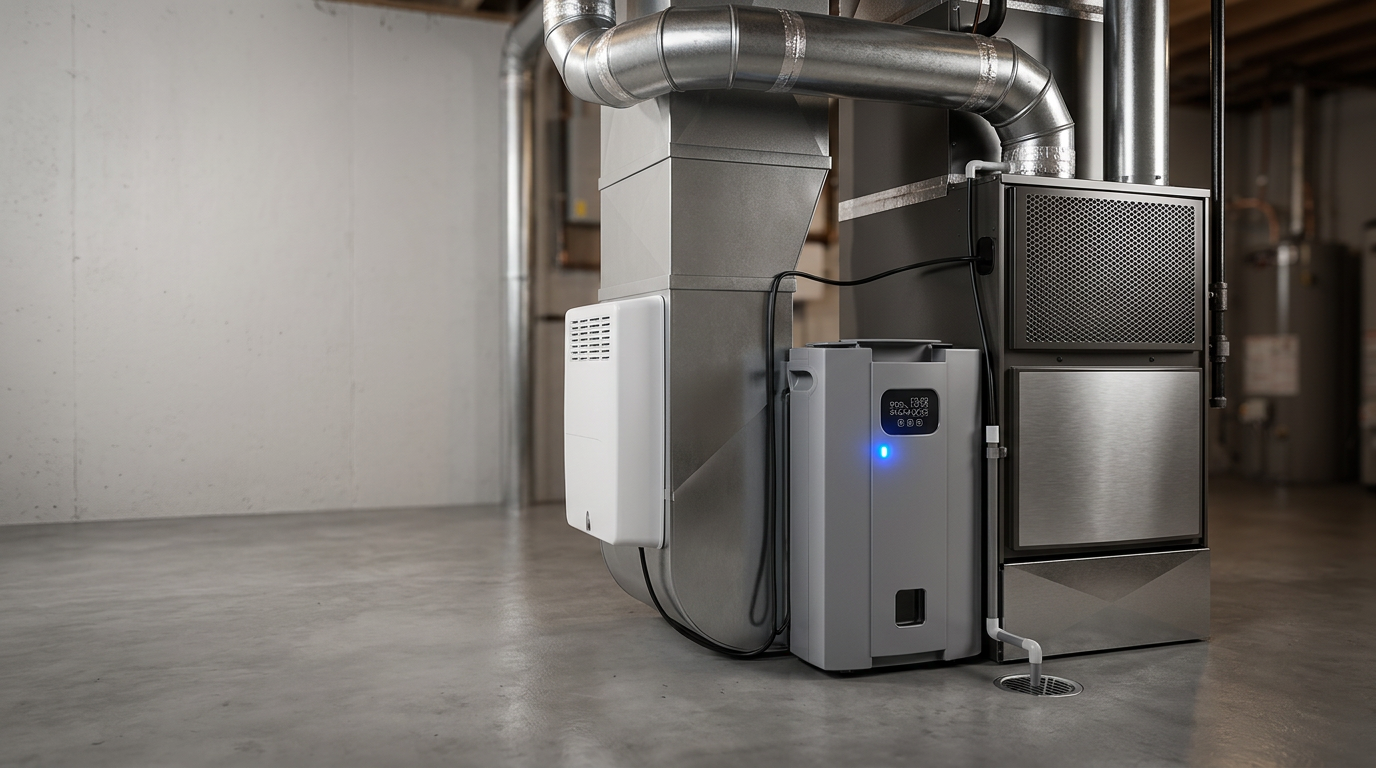
A whole-home dehumidifier ties directly into your existing ductwork and pulls moisture from every room, not just the one where you plug in a portable unit. No buckets to empty. No extension cords across the floor. It runs quietly, automatically, and keeps your entire house at the right level.
Most homeowners who call us wish they'd done this years ago. The difference is that obvious.
Choosing the Right Dehumidifier for Your Westland Property
This is where most homeowners get stuck. You know you need something, but the options feel overwhelming. Portable unit? Whole-house system tied into your ductwork? Something in between? We walk through this with folks in Westland every week.
Here's the honest truth. A portable dehumidifier from a big box store might work for a small closet or a half bath. But if you're dealing with a damp basement that runs under your whole house, or a crawl space that stays wet from April through October, you need something with real capacity. Most basements in the Norwayne neighborhood sit on older block foundations that wick moisture like a sponge. A little plug-in unit can't keep up with that.
So how do you figure out what fits? Square footage matters, but it's not the whole picture. We look at how much moisture your space actually produces. A 1,200-square-foot basement with visible condensation on the walls needs a completely different setup than a dry basement that just smells a little musty in July. We measure relative humidity levels, check for standing water sources, and look at your existing HVAC system to see what we can tie into.
Whole-house dehumidifiers connect directly to your ductwork and drain line. They run quietly, cycle automatically, and you never have to empty a bucket. That's the setup we recommend for most Westland homes, especially ones built before the 1980s where vapor barriers weren't standard. When selecting a unit, look for models that meet ENERGY STAR certified dehumidifier efficiency standards — they remove the same moisture while using significantly less electricity.
Not sure which direction makes sense for your situation? That's actually pretty common. The size of your home, the age of your foundation, whether you've got a sump pump already running, all of it factors in. Getting the right unit matched to your actual conditions saves you money and headaches down the road. Oversizing wastes energy. Undersizing means the problem never really goes away.
The right dehumidifier shouldn't be a guess. It should be a calculated decision based on what your home actually needs.
What to Expect During Dehumidifier Installation in Westland
Most people have never had a dehumidifier installed before. So not knowing what the process looks like? Totally normal. Here's how it actually goes when our team shows up.
First, we do a walkthrough. We're checking your basement or crawl space for the spot to place the unit. It needs to be near a floor drain or a spot where we can run a condensate line. In a lot of Westland homes, especially in the Norwayne area, basements were built with a drain right in the center of the floor. That makes things straightforward. But if yours doesn't have one, we'll figure out a clean path to get the water out. We also look at your electrical setup. A whole-home dehumidifier needs its own dedicated circuit, and we make sure that's handled safely and up to code.
The actual install usually takes a few hours. Not all day.
We mount the unit, connect the drainage, wire it up, and tie it into your existing HVAC ductwork if that's the right setup for your home. Some units work as standalone systems in the basement. Others connect directly to your furnace's return air duct so they treat the whole house. We'll already know which approach fits your situation before we start any work.
Once everything's connected, we run the system and check humidity readings in multiple spots. We're looking for the unit to pull your levels down into that 40 to 50 percent range. If something reads off, we adjust the settings or check airflow right then and there. You won't be left guessing whether it's working.
One thing we always do before we leave is walk you through the controls. You'll know how to read the humidistat, adjust your target level, and check the filter. It takes about five minutes and saves you a phone call later. We also make sure you know where the condensate line drains so you can keep an eye on it.
No mess, no mystery. You'll see exactly what we did and why we did it.
How Kaiser's Heating & Cooling Verifies a Proper Installation
Hooking up a dehumidifier and walking away isn't how we do things. Not even close. Every install we finish in Westland gets a full verification before we pack up our tools.
First thing we check is airflow. We run the unit and measure the air moving through the ductwork connections. If the dehumidifier can't pull enough damp air in or push dry air back out, it won't do its job. We've caught kinked flex ducts, undersized returns, and even filter packaging left inside brand new units. Sounds silly, but it happens.
Then we verify the drain. Whether it's a gravity drain to a floor drain or a condensate pump pushing water to a utility sink, we watch the full cycle. We pour water into the reservoir and confirm it moves where it should. A drain that works for thirty seconds during a quick test can still fail when the unit runs for hours. So we take our time here. A lot of the older homes in Norwayne have floor drains that sit higher than you'd expect, which changes how we route the line. We always double-check the pitch.
We also pull out our hygrometer and take humidity readings in the space. This gives us a baseline number right at startup. We set the unit's target based on what the space actually needs, not just a factory default. Most basements in Westland should sit between 45 and 55 percent relative humidity. The EPA says keeping indoor humidity below 60 percent is key to preventing mold growth.
Electrical gets a final look too. We confirm the circuit isn't shared with something that'll trip the breaker when both kick on at once. Dedicated circuits matter more than most homeowners realize.
Most of the time, everything checks out on the first pass. But when it doesn't? That's exactly why we verify. Our licensed technicians don't sign off on an install until every piece works together the way it should. You shouldn't have to wonder if it was done right. You should know.
Keeping Your Dehumidifier Running Well in Westland's Climate
Your dehumidifier isn't a set-it-and-forget-it appliance. Not in Westland.
We sit in a climate that swings hard. Winters are cold and dry, then spring rolls in and dumps moisture everywhere. Summer? That's when basements in the Norwayne area turn into swamps if the equipment isn't keeping up. Your unit runs harder here than it would in a lot of other places, and that means it needs attention to stay reliable.
The single biggest thing you can do is clean or replace the filter. Check it once a month during heavy-use seasons. A clogged filter makes the unit work twice as hard to pull half the moisture. Most homeowners don't notice this until their energy bill jumps or the basement starts smelling damp again.
Empty the collection bucket before it's full. Sounds obvious, right? But we get calls every summer from folks whose dehumidifier shut itself off because the reservoir overflowed. If your unit has a gravity drain or pump line, make sure that hose isn't kinked or clogged. We've pulled all kinds of stuff out of drain lines, dust, mineral buildup, even insect nests.
Keep the coils clean too. When dust coats the evaporator coils, ice can form on them. That's a problem you'll actually see. If you notice frost building up on your dehumidifier, shut it off for a few hours and let it thaw, then clean those coils with a soft brush. If it keeps icing up, something else is going on and you'll want a tech to look at it.
One thing people overlook is placement. Don't push the unit flush against the wall. It needs airflow on all sides to work properly. Give it at least six inches of clearance and keep it away from dust sources like dryer vents or workshop areas if you can.
Westland's humidity can spike fast after a heavy rain, especially in older homes near the Central City Park area where drainage isn't always ideal. A well-maintained dehumidifier handles those spikes without breaking a sweat. A neglected one? That's when you start seeing mold creep back in. Need help keeping yours in shape? Give us a call.
