
Kaiser's Heating & Cooling
    5 out of 5 stars on Google

    Building automation systems in Westland and Metro Detroit

    Building automation systems help Westland property owners take control of their HVAC, lighting, and other building systems from one central platform. If your building is running inefficiently or your tenants keep complaining, this page covers what you need to know.

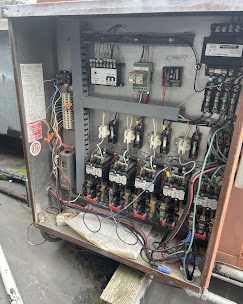
    Commercial control panel large

    Recent Work

    Photos from real Kaiser's jobs across Metro Detroit.

    Commercial control panel large
    Commercial control panel
    Commercial panel fuses
    Building electrical and control wiring

    Need Building automation systems? Get a Free Estimate.

    Skip the search — call now or send your details and we'll respond fast.

    Part of our Mechanical Contractor services in Westland and Metro Detroit.

    Building Automation Systems in Westland: Smarter Control for Your Building

    Building automation systems help Westland property owners take control of their HVAC, lighting, and other building systems from one central platform. If your building is running inefficiently or your tenants keep complaining, this page covers what you need to know.

    Signs Your Westland Building Is Ready for an Automation Upgrade

    You're walking through your building on a Monday morning and the second floor feels like a sauna. The first floor? Freezing. Your tenants are complaining, your energy bills keep climbing, and nobody can figure out why. We get this call at least twice a month from building owners right here in Westland.

    That's one of the clearest signs. But there are others you might not connect to automation at first.

    If your maintenance crew is constantly adjusting thermostats, resetting schedules, or manually turning systems on and off, that's a red flag. Buildings shouldn't need that much babysitting. Most of the time it means your controls are outdated or your systems aren't talking to each other. We see this a lot in older commercial properties near Westland's Central City Parkway area, where buildings went up in the '80s and '90s with standalone HVAC units and no central management.

    Here are some other things to watch for. Your lighting stays on in empty rooms all weekend. Your boiler runs even when outdoor temps don't call for it. You've got multiple contractors managing separate systems and none of them coordinate. Or maybe you just replaced a rooftop unit and realized the new equipment can do way more than your old controls allow.

    Energy costs that keep rising without a clear explanation are another big one. The U.S. Department of Energy estimates that building automation can cut energy use by 10 to 30 percent in commercial buildings. If your utility bills have been creeping up year after year, there's a good chance your systems are running inefficiently because nothing is coordinating them.

    And here's something most building owners in Westland don't think about. Comfort complaints from tenants or employees aren't just annoying, they're costing you. People leave spaces that don't feel right. They call you instead of focusing on their work. That friction adds up fast.

    Not sure if what you're dealing with qualifies? Most people don't realize how many of their daily headaches trace back to controls that are either missing or outdated. If even two or three of these sound familiar, your building is telling you something.

    How Building Automation Systems Work in Westland Commercial Properties

    Questions About Building automation systems?

    Get a free estimate or talk through your options with our team.

    Think of a building automation system as the brain of your property. It connects your HVAC, lighting, security, and fire safety into one central control point. Instead of each system running on its own schedule with no awareness of the others, everything talks to everything else. That's where the real savings and comfort come from.

    Here's what actually happens. Sensors placed throughout your building collect data constantly, temperature, humidity, occupancy, CO2 levels, even how much daylight is coming through the windows. That data feeds back to a central controller, which makes decisions in real time. Too warm on the second floor of your office near Westland Shopping Center? The system dials back heating before anyone even notices. Conference room empty for 30 minutes? Lights dim and airflow adjusts automatically.

    We see this every week. A property manager calls us because their energy bills keep climbing and nobody can figure out why. In most cases, it's systems fighting each other. The AC runs while the heat is on in another zone. Lights stay at full brightness in empty hallways all weekend. A building automation system eliminates that waste by coordinating everything from one platform.

    Most commercial properties in Westland run on a mix of older and newer equipment. That's fine. Modern automation controllers use open protocols like BACnet and Modbus, so they can communicate with equipment from different manufacturers and different decades. You don't need to rip everything out and start over. We tie into what you already have and build the intelligence layer on top.

    So what does this look like day to day for you? You get a dashboard, usually accessible from your phone or any web browser. You can see real-time conditions across your whole building, set schedules, and get alerts when something drifts out of range. According to the U.S. Department of Energy, automated buildings typically reduce energy consumption by 10 to 30 percent compared to manually operated ones.

    Most Westland property owners we talk to don't realize how straightforward the setup can be, especially in retail centers, medical offices, and multi-tenant buildings along Ford Road and Warren Road. The technology scales up or down depending on what you need right now.

    What Kaiser's Heating & Cooling Does When Installing a BAS in Westland

    We don't just show up and start wiring things together. Every install starts with a full walkthrough of your building. We check your existing HVAC equipment, lighting controls, and any older thermostats or sensors already in place. Then we sit down with you and map out exactly what you need this system to do.

    That conversation matters more than people think.

    Some Westland building owners want simple scheduling. Others need zone-by-zone temperature control across multiple floors. A few want real-time alerts sent to their phone when something drifts out of range. We've handled all of it. The point is, your system gets built around your building and your priorities, not a one-size-fits-all template.

    Once we've got the plan locked in, our team handles the physical install. That means mounting controllers, running low-voltage wiring, placing sensors in the right spots, and connecting everything to a central platform you can actually use. We pay close attention to sensor placement because a thermostat in a dead air pocket or next to a supply vent will give you garbage readings. We see that mistake in older installs all the time, especially in commercial spaces near Norwayne and along Ford Road.

    After hardware goes in, we program the system. This is where the real value kicks in. We set your schedules, configure setpoints for each zone, build in occupancy-based adjustments, and test every input and output. If your rooftop units need staged startup sequences to avoid demand spikes, we program that too. Nothing gets left on default settings.

    And we don't hand you a manual and walk away. Our technicians run the full system with you watching. We show you how to check dashboards, adjust schedules, and read basic alerts. You'll know what normal looks like so you can spot problems early. We're licensed, insured, and we've been doing this work across Westland for years. If something needs tweaking after go-live, we're a phone call away.

    Verifying Your Building Automation System Is Working Correctly in Westland

    So your system's installed and running. But how do you actually know it's doing what it's supposed to do? This is the part most people skip. And it's the part that costs them the most money down the road.

    We start every verification with a full point-to-point checkout. That means we test every sensor, every actuator, every relay in the system, not just a quick glance at the dashboard. We physically confirm that when the thermostat in your second-floor office calls for cooling, the right damper opens, the right valve adjusts, and the right fan kicks on. We see mismatched wiring on about one in five jobs we inspect that someone else set up. One wrong connection and your system thinks it's heating when it's actually cooling. You won't catch that from a screen.

    Trend logging is your friend here. We set up data trends on key points like supply air temps, zone temps, and equipment runtimes, then let the system run for a few days. When we come back, those trends tell us everything. Is the boiler short-cycling? Is a VAV box hunting back and forth and never settling? The data doesn't lie.

    For commercial buildings around Westland, especially older ones near the Norwayne neighborhood, we pay extra attention to how the system handles transitions. Morning warm-up routines, occupied to unoccupied switchovers, weekend schedules. These are the moments where things go sideways. A lot of the time, a building owner calls us because their energy bill spiked and they can't figure out why. It's almost always a scheduling issue or a sensor that drifted out of calibration.

    We also run override tests. We manually force outputs on and off to make sure the system responds correctly. If a damper actuator is stuck or a relay is welded shut, this is how you find it, not six months later when a tenant complains.

    According to ASHRAE, proper commissioning and verification can reduce energy waste by 10 to 15 percent in commercial buildings. That's real money. And it's money you're already spending if nobody's checked the work.

    Once everything checks out, we document it all. You get a clear report showing what was tested, what passed, and what needed adjustment. That gives you a baseline, next time something feels off, you'll know exactly where to look.

    Keeping Your Westland Building Automation System Running Long-Term

    Here's the truth most people don't hear until something breaks. Your automation system doesn't just run on its own forever. It needs attention, not constant babysitting, but regular check-ins that catch small problems before they turn into expensive ones.

    We get calls from building owners near Norwayne who haven't touched their system in three or four years. By that point, sensors have drifted out of calibration and schedules haven't been updated since the last tenant left. The whole system is working harder than it needs to, burning energy and money every day. A simple quarterly review would've prevented most of it.

    So what does long-term maintenance actually look like? It starts with software updates. Your building automation platform gets patches and improvements just like your phone does. Skipping those updates leaves you open to glitches, security gaps, and compatibility issues with newer equipment. We handle those updates during off-peak hours so nothing disrupts your tenants or operations.

    Sensor calibration is the other big one. Temperature sensors, humidity sensors, CO2 monitors, they all drift over time. A sensor that reads two degrees off doesn't sound like much, but multiply that across a 50,000 square foot building in Westland and you're looking at real waste. We test every sensor against a known reference point and recalibrate or replace anything that's off.

    Then there's trend analysis. Your system logs data constantly. Most building owners never look at it. We do. We pull reports that show how your equipment is performing week over week. If a rooftop unit starts cycling more than usual, we catch it in the data before it fails on the hottest day of July.

    According to ASHRAE, buildings with proactive maintenance programs use 10 to 20 percent less energy than those running on a fix-it-when-it-breaks approach. That lines up with what we see in the field every day.

    Want us to set up a maintenance schedule that actually makes sense for your building? Give us a call.

    One more thing. As your building changes, your automation system should change with it. New tenants, different operating hours, added equipment. We adjust your programming so the system always matches how your building is actually being used. That's what keeps it running right for years, not just months.

    Ready to Request an Estimate?

    Call now or send us your details — over 20 years of on-the-job experience serving Westland and Metro Detroit.

    Frequently Asked Questions

    Ready to Get Started?

    Talk with our team about your building automation systems project. Over 20 years of on-the-job experience serving Westland and Metro Detroit.

    Related Services

    Call NowRequest Estimate